
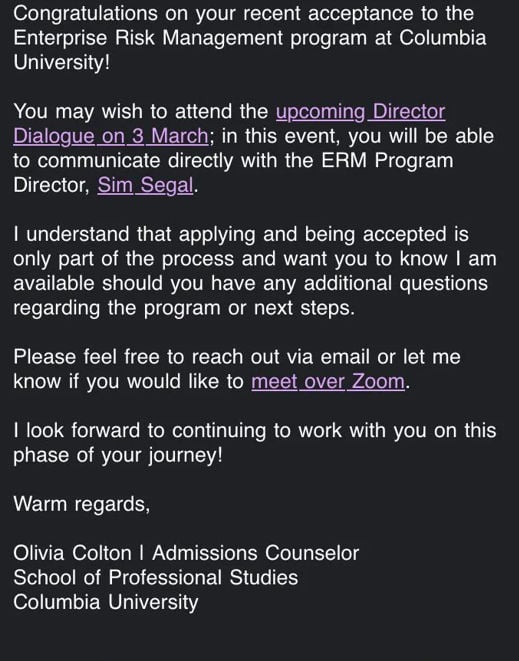
Columbia University Enterprise Risk Management Email – Scam or Legit?
In recent weeks, emails have been circulating claiming to be from Columbia University’s Enterprise Risk Management department. The emails, sent to unsuspecting recipients, claim to inform the recipients that their information has been compromised due to a security breach, and that they must take immediate action to prevent any potential financial losses. While the email may appear legitimate at first glance, it’s essential to scrutinize its authenticity to avoid falling prey to a potential scam.
The email typically begins by stating that the University’s security team has identified a vulnerability in their network, which has resulted in the exposure of sensitive information. The email then warns that the recipient’s information, including their financial data, may have been accessed and suggests that they take immediate action to secure their accounts.
However, a closer examination of the email reveals several red flags. Firstly, the email’s grammar and language are inconsistent with official communications from reputable institutions. The tone is often harsh and aggressive, with a sense of urgency that can be a hallmark of phishing scams. Additionally, the email fails to provide any specific details about the alleged security breach, such as the root cause of the issue, the affected systems, or the corrective measures being taken to prevent future incidents.
Moreover, it’s worth noting that Columbia University’s official website and communication channels do not send out unsolicited emails to individual students, faculty, or staff members. Official communication channels typically use secure methods to verify the authenticity of such messages, and these emails often are not sent directly to individual recipients. This lack of transparency and the absence of official protocol in the email’s communication are significant indicators of a potential scam.
Furthermore, the email’s attempt to create a sense of urgency is a classic tactic used by scammers to trick victims into taking action without thinking twice. The message may use language such as “Act now to prevent financial losses” or “Your account will be compromised if you don’t take action within the next 24 hours.” This is a common tactic used to create a false sense of urgency and panic, making it difficult for the recipient to think clearly and make rational decisions.
In light of these red flags, it is clear that the Columbia University Enterprise Risk Management Email is likely a scam. The email’s inconsistencies, lack of transparency, and sensational language are all hallmarks of a phishing attempt. It is essential for the general public, as well as students, faculty, and staff members at Columbia University, to be aware